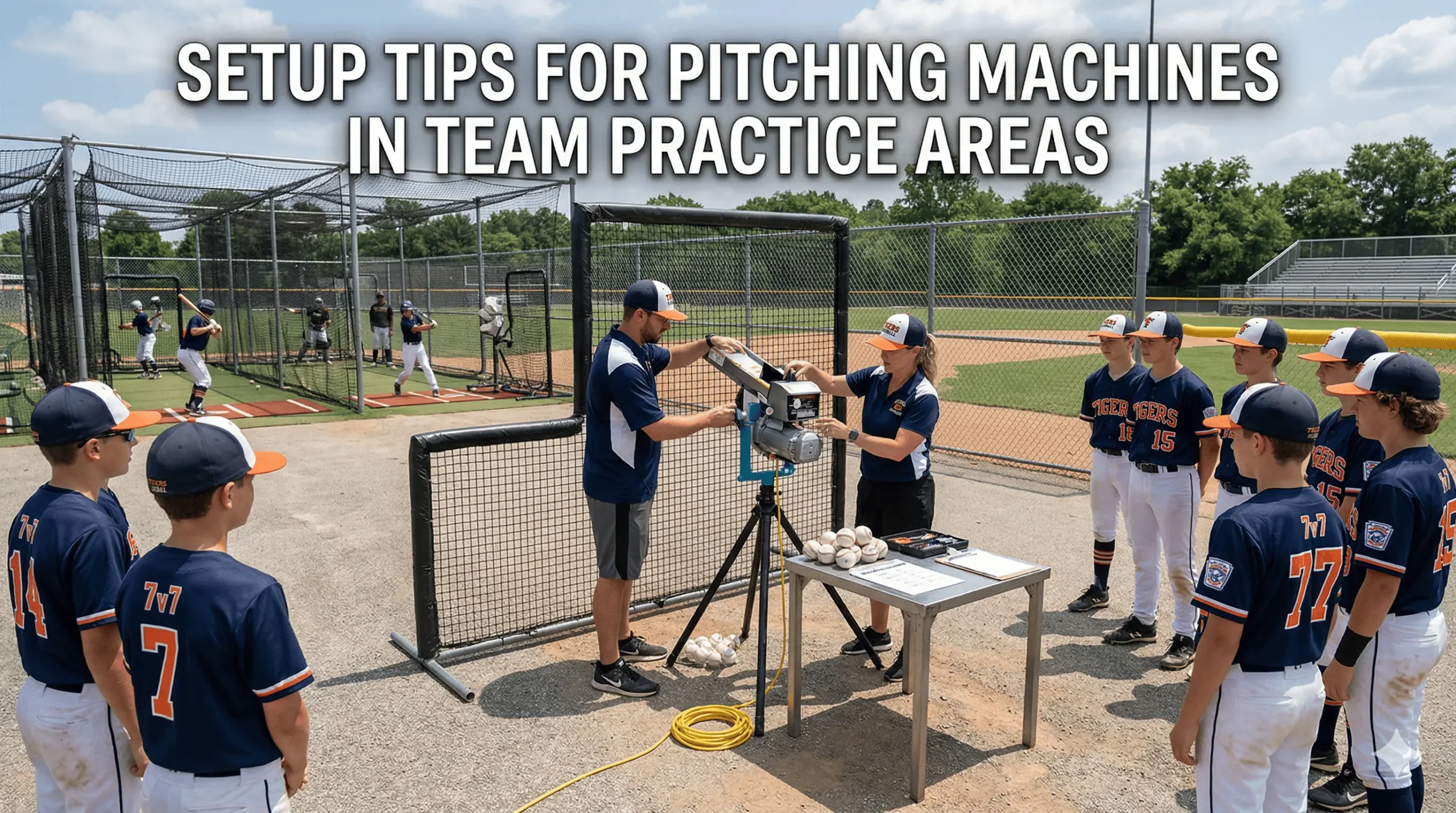
Professional pitching machines for batting cages and team practice are an essential tool for baseball and softball teams. They allow players to practice hitting consistently, improve timing, and develop better hand-eye coordination. But simply placing
Professional pitching machines for batting cages and team practice are an essential tool for baseball and softball teams. They allow players to practice hitting consistently, improve timing, and develop better hand-eye coordination. But simply placing a machine on the field isn’t enough. Setting it up properly is crucial for safety, efficiency, and getting the most out of practice sessions. Here’s a complete guide with easy tips to set up pitching machines in your team’s practice area.
1. Choose the Right Spot
The first step is selecting a safe and suitable location. Look for a flat area free of obstacles like fences, poles, or benches. Make sure there’s enough space behind the batter, as well as around the sides, to avoid accidents.
For baseball, a distance of 35–50 feet between the machine and the batter works well, depending on the age and skill level of players. Softball machines usually sit closer, around 25–35 feet, to match typical pitching speeds.
Also, consider the surface. A turf, dirt, or level grass area is best. Avoid slopes or uneven ground that can affect the machine’s stability or ball trajectory.
2. Secure the Machine
Stability is key. Most pitching machines are heavy enough to stay in place, but you should ensure it won’t tip over during use. Some machines come with built-in stabilizers or mounting options. For portable models, placing sandbags or using stakes (if allowed on the field) can prevent movement.
A steady machine is not just safer—it also provides consistent pitching, which is vital for effective practice.
3. Adjust the Speed and Angle
Pitching machines are adjustable, allowing coaches to tailor practice for different skill levels. Beginners may start with slower pitches, while advanced players can handle higher speeds.
Angle adjustment is also important. Some machines can throw straight balls, while others can simulate curveballs, sliders, or rise balls. Positioning the machine at the correct height and tilt ensures the ball enters the strike zone properly. Always test a few pitches before letting players hit.
4. Focus on Safety
Safety should always come first. Make sure all players and coaches are aware of the machine’s operating area. Only the batter should be near the front, and everyone else should stand well behind or to the side.
Players should wear helmets, especially younger athletes. Check that no loose equipment, bags, or water bottles are in the hitting zone. If using machines outdoors, be cautious of wet or slippery surfaces.
5. Use Protective Netting
Installing netting around the pitching machine and the batter can prevent stray balls from causing injuries or damaging property. Portable net systems are available that can surround the pitching area completely, creating a controlled practice space.
Netting is particularly helpful in team settings, where multiple players may be waiting for their turn. It adds an extra layer of safety and ensures that practice can continue smoothly without interruptions.
6. Organize Balls Efficiently
Keep a supply of baseballs or softballs nearby in a bucket or container. This reduces downtime and keeps practice flowing. For team practice, you may need several buckets to make sure multiple players can rotate efficiently.
Labeling balls or using different colored balls for drills can also help coaches run specific exercises more effectively.
7. Train Coaches and Players
Before practice, make sure coaches know how to operate the machine safely and adjust it for different drills. Players should also understand basic safety rules, like where to stand and how to retrieve balls safely. A brief demonstration at the start of practice can prevent accidents and keep sessions organized.
8. Maintenance and Care
Regular maintenance keeps pitching machines in top condition. Clean the wheels or belts, check for loose bolts, and inspect electrical or battery components regularly. Proper maintenance ensures the machine continues to throw consistently and safely for years.
Final Thoughts
Pitching machines are a valuable addition to any team’s practice area, offering consistent, controlled pitching that helps players improve quickly. But without proper setup, they can be ineffective or even dangerous.
By selecting a safe location, securing the machine, adjusting speed and angles, using protective netting, and maintaining equipment, coaches can ensure practice sessions are productive and safe. With the right setup, your team can make the most of their practice time, building confidence and skill at every level.